Wednesday, May 23, 2012

Jenifer - on way to "Inserted Community"

Last Wednesday, in the morning at about 9.00 am I was traveling from Bolpur to Kolkata. Suddenly I got a call on my cellphone from a Kolkata number. When I picked it, I just couldn't believe my ears. It was my niece Jenifer. She was in Philippines for the last two and a half years, and had just returned. Just before she left for Philippines she had tried to meet me several times, and was able just once, as I was busy with the post-cyclone Aila response coordination at that time. She had gone to Philippines to become a nun! And she is one today. I spoke to her for a while and she said that she is leaving Kolkata at 12.00 noon to leave for Tamilnadu and then to Philippines as she plans to spend the early years of her service in an "inserted" community in Philippines. I told her to wait till 12 noon, and I promised to meet her at 11.30. Although I had few other small appointments, I postponed them, and I went to meet her at Anjali Bhavan in Ripon Street, Kolkata, and reached sharply at 11.30, with my driver doing his best part to make it happen.

She hugged me and held on to me for a while, and then we began to talk for some time. She was served an early lunch at 11.45 so that she can leave on time to catch the train. Jenifer had some personal problems and I had supported her early in life so that she grows into a mature woman. And she seems to be a mature one today. I asked her why she is planning to be serve in Philippines for some more time, in stead of returning to India. She said she wanted to be in an "inserted" community and serve the poor. What is this "inserted community" all about? She explained, it is a small little community of religious living with the people like people in remote utterly poverty stricken locations with exactly the same facility like that is available to the poorest family in the area! Hei, someone called it serving the poor? But here it is...."living the poverty"! As we kept talking I told her about the mosquito menace in Kolkata and other places in India. And asked her if there are plenty of mosquitoes in Philippines too. "Of course", she replied, "Only the difference is, we do not use mosquito nets!" She continued, "In inserted communities because we live like the poor and with the poor, because the poor do not have mosquito nets, we too do not use one! I had an opportunity to live in a community for two months. And that is what we did. And when I return, that is what I will do!". 

My developmental mind took over me. "Isn't it right that we educate people about using mosquito nets? We should teach them what is good, and help them achieve that.", I said. She in her simpler tone replied, "Yes uncle. All the families in that place are able to afford a mosquito net, then we will have one too!"

In the context of motor cycle riding and jazzy car winding religious in India, can someone show me if there are a few "inserted" community in this sense of the term?

Sunday, May 20, 2012

Driven by Google Drive

Many of us do not use a special facility that Google has endowed us with, although we might be using Google for mailing or search purposes. Google has a facility for an online storage, called Google Drive. Google gives you 5 GB as a free gift to start with, and then, as the number of documents increase in your system, it is expected to grow to 25 GB, absolutely free! I tried this recently, and Voila ! It is amazing. I downloaded the Google Drive installer, and have them installed on 2 laptops and one desktop PC. It created a Google Drive shortcut icon on all the computers. And now, I can open any of them, and have all my files as they are! You can access all files as updated as they are without any problem. The files get synchronized whenever you any edit any of them. You can work on the files as if you are working on a normal computer, and let the files get automatically synchronized when you are online. Perfect tool for people who travel a lot, and might at times not have access to their own computers. This is also a very good tool for networking on same documents. You must try it to believe it.

Note: In case you see that the Google Drive is not activated for your account, that is because you do not have any documents saved into Google. The easiest way to get the Google Drive facility is save some of your documents under "Documents" from your Google account. It might take a few days after that for Google to activate your Google Drive.

Thursday, May 10, 2012

Fire and Fireworks

9 May 2012, Hyderabad, India

I traveled from Kolkata to Hyderabad by a Spice Jet flight. The journey was uneventful as I kept working on a project for Seva Kendra, Kolkata. From Hyderabad airport I took a prepaid cab to Jawaharlal Nehru Technological University where I am put up for the next two days. On may way, I kept peeping out to see something new. And I found this one. After we crossed Jubilee Hills and as we turned towards Kakatpally I saw a Standard Fireworks shop selling fire crackers. The shop had been separated from other shops with some space on its right and left, and the shop also had iron grills in front so that no one can enter in. This is to prevent (a) In case of a fire outside, it may not enter the shop quickly; (b) If there is a fire in the shop, the impact may be less on others; (c) Minimize the possibility of any antisocial or careless customer setting fire on any of them; and (d) in case of a fire when customers are doing any purchases, the customers will be able to escape, and won't be found to be inside the shop, exposing themselves.

Now compare this to the way fire crackers are sold in Kolkata, West Bengal. You will notice women, children and some men going around selling them just holding them in their hands in the crowded market in Burra Bazar, in Strand Road and in M.G. Road. You can see every shop selling their wares (combustible fire crackers) just on the road side. This is selling disasters on street....at discounted price.

Governments, people, civil societies and shop keepers....everyone need to unite to work towards a "culture of prevention". Such cultures are not built in a day. They are cultivated through years of hard pursuit of policies, strict implementation of laws, and commitment of citizens to follow it through for their own safety. Let there not be just a culture of preparedness, but also a culture of prevention.

Selling Poverty

I was traveling on 08 May from Malda to Bolpur by the Malda - Bardhamman passenger train, after a visit to Raiganj. This train is usually not very crowded, and so I get ample space to continue to work on my laptop. As I completed working I gentleman in his mid-thirties who had joined me en route about a few stations before I shut down the laptop started the conversation in Bangla language.

Co-Passenger: Sir, Where are you traveling to?
Puthumai: I am going to Bolpur

Co-Passenger:Are you a doctor ?
Puthumai: No, I am not. I work in an NGO on polio and on disaster management.

Co-Passenger: Is it possible if you can find a job for a very poor young man? He deserves it. He is very poor.
Puthumai: Hmm...hmm. What does he know to do?

Co-Passenger: He is a very deserving person, and he is very poor. He needs a job very much....
Puthumai: But that is not a qualification for a job. Poverty is not a qualification for job. You tell me what that young man can do. Say for example, he can clean the house, he can maintain a garden. You don't tell me nor anyone that because someone is poor one must give a job. By the fact that some one gets to "do a job", one must be capable of doing what is on offer. So, tell always what one can do, and then say "also this person is poor, and so he also additionally needs the job."
There was a couple of minutes of silence. Then,


Co-Passenger: I am actually talking about myself.
Puthumai: What do you do?

Co-Passenger: I drive tractors. But I don't earn much on that.
Puthumai: Do you know to drive trucks....small or big?

Co-Passenger: Yeah, I do.
Puthumai: Great! So, now you have some potential. I know many drivers who shift to Andhrapradesh, Karnataka, Delhi, Punjab, Tamilnadu and Kerala as the drivers get paid much higher in those states. Why don't you try out something there.

Co-Passenger: I had once been to Kerala. The money was good. But I had problem with food and language.
Puthumai: What work were you doing in Kerala?

Co-Passenger: Mostly menial labor in construction sites and house repairs.
Puthumai: You did something that every other laborer does. You did not do something special that you are capable of....driving tractors and trucks for which salary is high, and there are very less people in those states who can do it. As for language and food, you could have shifted to some other high paying state where Hindi is spoken, and that you could have managed easily. Or, why don't you approach a bank to give you a loan to buy a tractor. That could bring in more money as you will be the owner of the tractor.

Co-Passenger: (another couple of minutes of silence) Thank you. My destination has arrived. I must get down. Thank you for the discussion.

After a minute the train stopped, and he got out of the train....then he looked at me, and walked away with a smile. I am not sure if I guided him right. But I know that selling poverty doe not work. Selling abilities does. Our poor must be taught to look at their abilities and not at the vacuums in life.

Friday, May 4, 2012

Crimes of the Younger Mind

India is faced with a sudden rise in juvenile crimes. For instance, in March and April 2012 we have seen at least three abductions organized by school students, all in their teens, which ended up unfortunately in the murder of the abducted fearing that their own friend whom they had abducted would reveal their identity. We have also seen some rapes and murders done by teenagers in the same time, and in one case it was a rape and murder of a baby girl by a teen! There was also the case of a teenager taking guns to the school to shoot the teachers because one of them had admonished him for some misbehavior. We are nearing the nadir of decency. 

The Indian law gives special protection to the juveniles. The Juvenile Justice Act has a broader perspective on the issues, and considers that the teenagers are misguided youngsters who can easily be transformed. It was also made with the then trend in mind that often teenagers were involved in theft (the most commonest crime among the teens then) given the general poverty of that time, and at times they were involved in other social evils such as public nuisance or some violence. In Indian penal code (IPC), presently a premeditated rape and murder, and rape of very young children in considered as "rarest of rare cases", and warrant for death penalty. Given the complications arising out of the Juvenile Justice Act and the IPC, there is a dilemma for the law enforcement authorities to follow the IPC, while the criminal is indulging in rarest of rare cases! Either the law needs to be changed, or the teens who are indulging in "adult crimes" must be treated as adults! Or else, soon we will have the "rarest of rare cases" happening as if they are routine crimes.

Tuesday, April 17, 2012

Mapping Polio Booths

After a car accident on 14 April early morning at 3.45 am, I returned with a crack in my left scaphoid, and bruises in both the legs. I find it difficult to operate my laptop with single hand as I use both my hands fully while on a PC. Anyhow, I guided my colleagues and got the mapping done for one of the crucial wards in Howrah Municipal Corporation - Ward 46. This is a high risk ward. We had over 700 resistant families in July 2011. Now there are little less than 400, and we cover about 350 highly resistant families. You may view the map below for details. The red dots are the locations of polio booths and a click on the booths will pop up the details for each location.

Thursday, April 12, 2012

Chelsea

This is not about the famous European soccer team. This is about a student from Seattle University who stayed with me three years ago. Chelsea was the first student to come to me "officially" as an intern. She was amazingly simple, and shared the joys and sufferings I went through in those days in 2009. She was someone to whom I could open my heart and confide. She could see through human heart and understand the underlying pain every person undergoes. Amazingly simple. She left an indelible mark in my life. Though I never wrote much about her in any of my posts, she kept coming back to my mind repeatedly, and so I thought I must write about her. 

Chelsea, for the rosy cheeks she had, was adorably honest with what she said. During her three months of stay, she would come straight and say if she would like to have something or would say how she can contribute to improve something. Gentle to the core, her words were never hurtful. I wish I had more time to spend with this extraordinary woman, who would only go up in life. (Update: Chelsea is now in South America as a Peace Corps volunteer.)

Saturday, April 7, 2012

Mapping the Early Warning Systems

The Tide and Wind Information System that we started for the benefit of people in the coastal West Bengal (mainly the Sunderbans) is now nearly nine months old. It is also time to map where we are working and to share it with everyone. As a matter of fact there is a lot more to be done, specially in terms of area outreach. The investment on each location costs about 14,000 rupees (280 US $). To manage the costs, we are looking for partner organizations and individuals who can support us in this venture. In G-Plot, where our researches are being held in setting this system, a local organization (IDASS) is supporting us for the location and volunteers for updating the message, and CKS is funding the costs. In Brajabhallavpur all locations are being sponsored by Concern Worldwide and their partners Sabuj Sangha and ECHO. The time is short as the next monsoon season is just about 50 days from now. And we must reach to at least 50 villages by then....if God willing. Below is the map of the places where already TWIS system is set up. Viewers can click on the dots and know more details about the location.

Tuesday, March 20, 2012

Saving Grace...

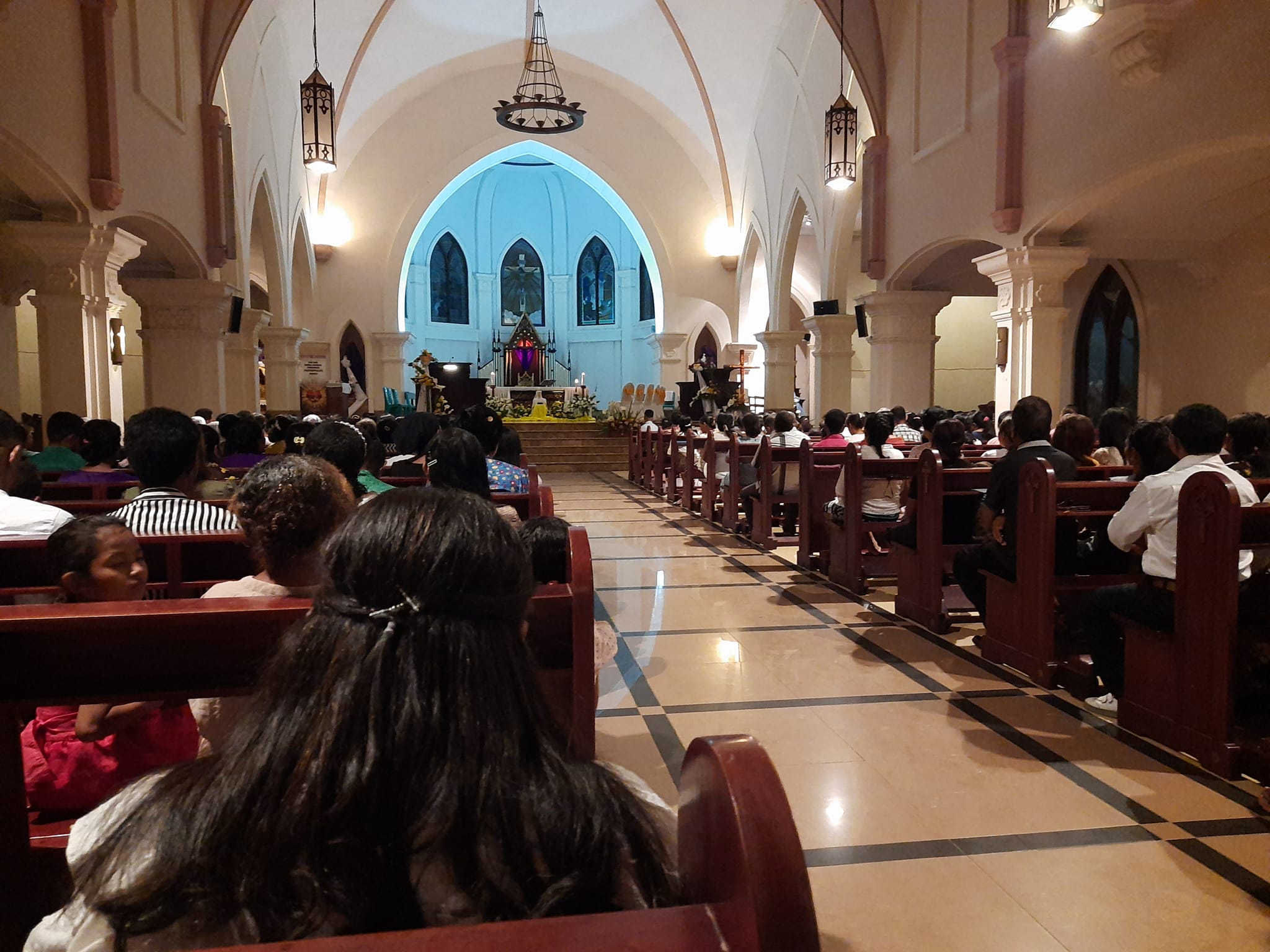
The Lenten season is on. Time for reconciliation, period of receiving God's grace through one's own act of charity, forgiveness and penance. Charity is in giving until it hurts. Forgiveness is in begging pardon for one's own acts of revenge, anger, sinfulness, and it is equally in terms of coming forward to forgive others even before one asks for it. This is a time of penance that should help one take control of emotions and feelings that can endanger anyone's life, dignity or name.

There is that element of eeriness floating in the Lenten air. A sense of deprivation, partaking in the sadness of the Master who wants to die a culprit's death, and a sense of loneliness that is pronounced in longer hours of prayer and silence. 

Almost every day I walk to some of the streets in Howrah and I see women and children handling filthy water that is home to every disease one can think of, and see children of Muslim brethren working in the household cloth industry with no thought of education or access to health and other services.  I know many of their houses and the roads that lead to their homes go under water exposing these people to more diseases. What is dignity to them? Grace is supposed to fill upon grace. But here, saving grace is yet to come.

I return back tired, almost deadly, and sleep off wondering if there will be a better tomorrow. Can the turn of every Lent bring in the joy of Easter?

Saturday, March 17, 2012

Luring with balls, whistles and gifts...

E. Hogden of USAID vaccinating a child in Uluberia, West Bengal
Tomorrow, 18 Feb, once again we will go through the Polio Sunday--trying to count if more children were vaccinated at the polio booths, and then throughout the week, counting the Xs (those who do not take the vaccine) and pray that there aren't too many resistant cases, and there are fewer children reported sick or out of home. It all happens in a week's time. To allure the children and parents to take vaccine at the booths, whistles are given by Unicef, balls are given by Rotary, and at times masks and caps! And besides that the ICDS centers are kept open so that children below 5 years can eat on a Sunday (usually ICDS centers are closed on Sunday) with an egg! Ooh.... the list of lollipops is getting wider and wider. This raises the fundamental question: are our programs really responding to people's perceived needs? The question is wrong as it tends to abdicate our responsibility to teach what is good for people. So, it must be placed as : Are we responding to the needs of people when we need them, or are we rushing to them to fulfill what we perceive as their needs, although selfishly, we want to benefit from the same as well? Now the question makes sense. If people's basic needs and need for health care, sanitation and education are not met, why should they vaccinate their children when we tell them to do so. 

The issue gets further complicated when we look into the amount of money that goes into this polio eradication program. At what cost have we achieved a title "polio free India" for 14 months ! Can our dolling out of freebies ever teach people the needs of health care if our health care systems function hardly for few hours in a day? Answers are deeper than the skin.